
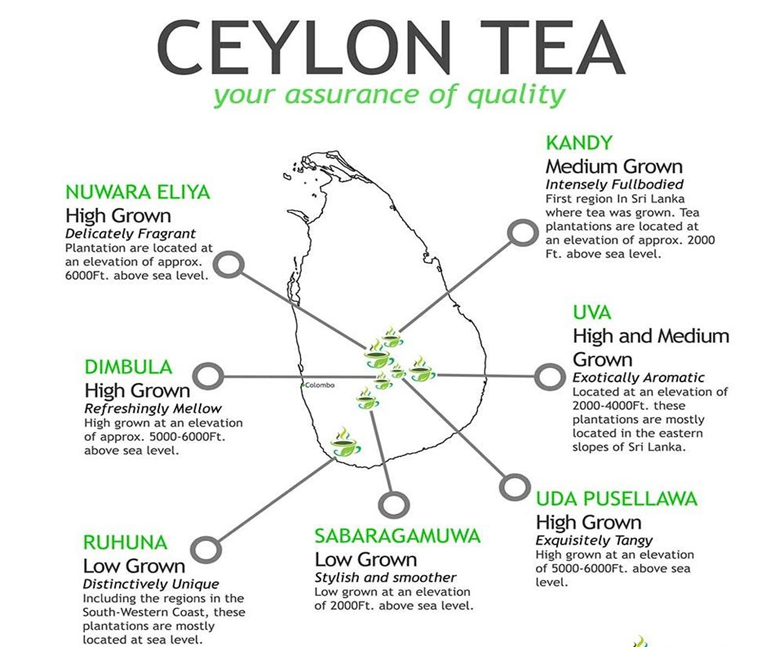


Low Grown Tea - Ruhuna
Tea grows almost from the sea level to around 2000ft above, and is considered as low grown. The uniqueness of the tea is the blackness as well as the strength and character in the cup with stylish range of leafy teas. The soil and the low elevation of the region contribute to the rapid growth of the tea bush and produce a long beautiful leaf that turns intensely black on withering. As the weather conditions are particularly warm and dry they produce burgundy hued liquor in the cup. The teas grown in this region have strong flavors, aromas and have distinctive qualities to it. Mainly consumed as black tea &possesses strong taste to which Arabian countries like.

Intermediate Zone - Uva
The tea grown in the eastern slopes of the central hills of Sri Lanka from 3000 to 5000ft above mean sea level & has a distinctive flavor and pungency specially during the quality season from July to September each year. They produce a leaf that is more blackened by withering than that of any other region and has a wide variety of ranges and the unique weather conditions contribute to the distinctive flavors and aromas that makes tea from Uva famous among tea lovers around the world. Uva region is also responsible for producing a significant amount of green tea.

High Grown Tea
Surrounded by an ecosystem comprises of mysterious misty, cloudy , evergreen mountain wet forests
(1)Nuwara Eliya:
Nuwara Eliya is a plateau at an elevation of 6240ft above sea level. The cold weather and freshness of the air have a great impact in producing a tea that becomes world famous. The tea itself is light in cup with exquisite flavor and aroma.
(2) in the western slopes of the mountains and the valleys
3500ft to 5000ft above sea level in the western slopes of the country. The area receives the south western monsoonal rains which has an impact on the quality of the Dimbula Tea , the cold nights and dry weather from January to March bring about a rage of teas from full bodied to light delicate flavor in different valleys.
Mild( soft ) tasting teas. Europeans have a great likeness to these teas.